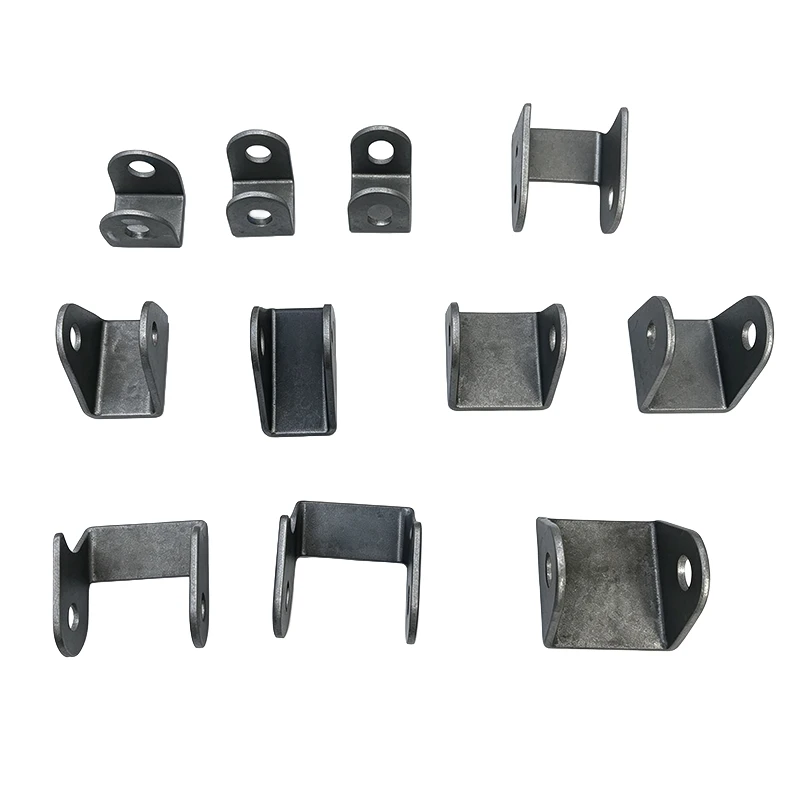
As automotive chassis architectures continue to evolve, mounting and suspension connection components face increasingly demanding requirements for strength, precision, durability, and vibration control. Modern component development involves multiple technical disciplines, including material engineering, structural design, elastomeric isolation, precision manufacturing, and performance testing. The integration of these technologies helps improve reliability under demanding operating conditions.
Material technology provides the foundation for these components. Metal brackets and support structures generally require sufficient strength and stiffness to withstand repeated mechanical loads during vehicle operation. Elastomeric components such as rubber bushings require carefully selected materials with stable performance under vibration, impact, temperature variation, and long-term loading. Appropriate material combinations allow manufacturers to balance load capacity, flexibility, and service life.
Structural engineering is equally important. Mounting and suspension components are often installed in confined areas of the chassis, so their geometry must satisfy installation requirements while controlling size and weight. Three-dimensional modeling and engineering analysis can be used to optimize bracket geometry, reinforcement features, and connection methods. This helps distribute loads more effectively and reduce localized stress concentrations.
Elastomeric isolation technology is commonly used in mounting structures that incorporate rubber bushings or other flexible elements. By adjusting material stiffness, hardness, and structural geometry, engineers can control movement characteristics in different directions. The resulting design can provide sufficient support while absorbing part of the vibration and impact energy. For powertrain mounting applications, effective vibration isolation is also an important factor in overall vehicle refinement and comfort.
Precision manufacturing directly affects assembly quality. Critical features such as mounting hole positions, connection dimensions, and mating interfaces require consistent dimensional control. Depending on the component design, processes such as stamping, machining, welding, and surface treatment may be combined to achieve the required structural integrity and dimensional accuracy.
Performance testing is another important part of quality assurance. Dimensional inspection, material evaluation, durability testing, and vibration-related testing can provide useful information about component behavior under representative operating conditions. These methods also help identify potential manufacturing or design issues before products enter service.
Overall, mounting and suspension connection components rely on a combination of material engineering, structural design, vibration isolation, precision manufacturing, and performance testing. As electric vehicles and advanced chassis technologies continue to develop, these components are expected to move toward lighter structures, greater dimensional precision, improved vibration control, and higher reliability, providing increasingly effective connection and support for modern automotive chassis systems.