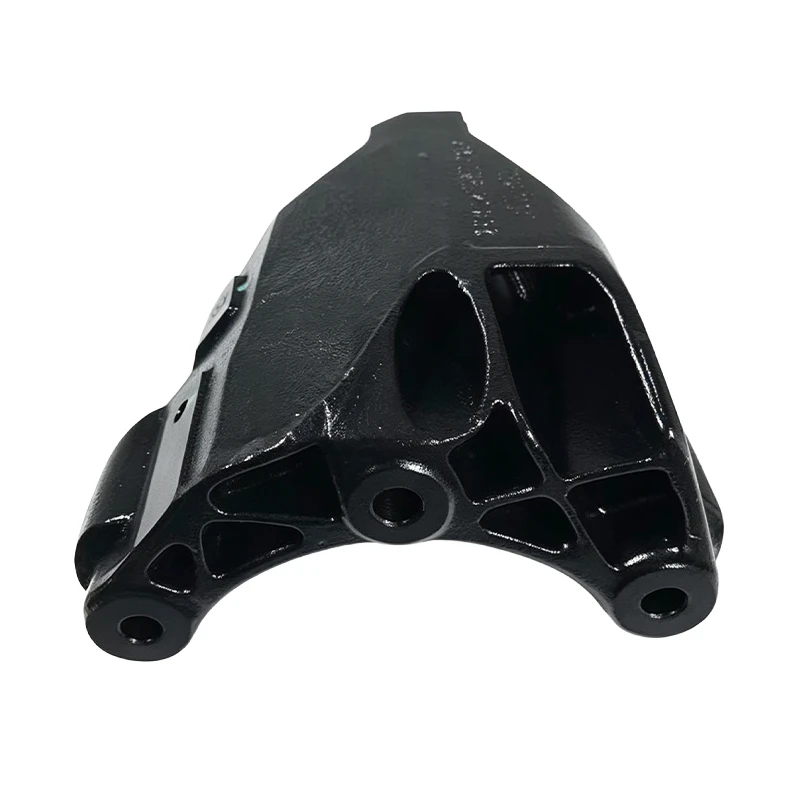
Mounting and suspension connection components are important supporting parts used throughout automotive powertrain and chassis systems. They provide structural connection, support, positioning, and vibration control between different assemblies. During vehicle operation, components are exposed to road impacts, powertrain vibration, and dynamic loads generated by acceleration, braking, and cornering. Reliable connection structures help maintain the intended relationship between these assemblies. Depending on the vehicle architecture and operating requirements, these components are used in a wide range of applications.
In powertrain installation, mounting components connect the engine and related powertrain assemblies to the vehicle body or chassis. Engines naturally generate mechanical vibration during operation, so mounting brackets, support structures, and elastomeric elements must provide both structural support and a degree of vibration isolation. A properly engineered mounting system can also limit excessive powertrain movement and maintain the assembly within its intended position.
Within suspension systems, connection components link suspension assemblies to the vehicle body or main chassis structure. When a vehicle travels over different road surfaces, the wheels move and the suspension responds accordingly. Brackets, bushings, ball joints, and support structures provide secure connections while allowing the controlled movement required by the suspension design.
Load transfer is another important application. Acceleration, braking, cornering, and uneven road conditions generate forces throughout the powertrain and suspension system. Mounting and connection components transfer these forces into the vehicle body or chassis while their structural geometry helps distribute loads around critical connection areas. This contributes to the stability of the overall mounting system.
Some connection components are also designed to reduce vibration and impact transmission. Elastomeric elements such as rubber bushings can deform under operating loads and absorb part of the mechanical energy. This reduces direct transmission of vibration to the vehicle body and can contribute to improved ride comfort and lower vibration levels.
These components also have an important role in vehicle maintenance and repair. After prolonged use, bushings may become aged or damaged, while brackets and other connection parts can experience wear or deformation. Inspecting these components and replacing them with correctly matched parts can help restore the intended connection between related assemblies.
Overall, mounting and suspension connection components are widely used in powertrain installation, suspension systems, load transfer, vibration isolation, and vehicle maintenance. As automotive engineering moves toward electrification and lightweight vehicle architectures, these components will continue to evolve in structural design and material selection to meet new requirements for reliable connections, precise installation, and effective vibration control.